


Investment Philosophy
Long Term Approach
The vast majority of our investors are or represent multi-generational families and, as a result, are "after" tax investors. For those investors it is important to emphasize the power of compounding by focusing on multiples on invested capital (MoIC), rather than IRR. It does a family with taxable, multi-generational wealth little good to sell a property after three years simply because the IRR is impressive. They are better served holding that property, operating it efficiently and increasing its value over time, particularly in a growing metropolitan market.
Our Investments
Our focus is on C class property within multi-family residential housing. This class of property has seen outsized rent growth (in comparison to A & B class) over the past two decades in market after market, though some markets have fared better than others. In markets where populations have boomed (Palm Beach, Miami, Atlanta, Dallas, Austin) the typical pattern has been for C class property to be demolished to make way for new A or B class properties. This leaves the typical tenants of C class apartments, families headed by blue collar workers, medical or education professionals or those in the service industry making just above or below the median household income, with less supply of housing. With the population growth there is more demand and greater demand combined with less supply leads to higher rents. Our goal is to purchase C class buildings that are not capturing these outperforming rents because of mismanagement, deferred maintenance or any other number of reasons and make the improvements that will provide a quality home for middle class households and excellent returns for our investor groups.


Our Process
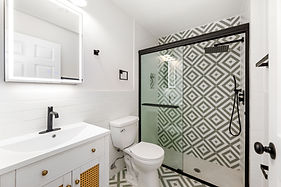
Once Investments are made they go through a cycle. The properties awaiting value-add are income producing, but typically feature higher operating expense ratios. They have deferred maintenance that must be addressed or it will be a drag on operations and, necessarily, returns. The combination of economic conditions, the state of the tenant base and the building and the overall portfolio's schedule for value-add projects will determine the move from awaiting value-add to a value-add project. All properties are purchased with the intent of eventually entering a value-add state and are done so in areas where the long and medium term economic trends support that choice. Once the property is stabilized, a new depreciation schedule, based off the value-add project is commenced. Between the tax treatment of depreciation and the capital improvements from the value-add phase, the early years of Stabilization should be very low tax or even no tax, depending on the property.
